
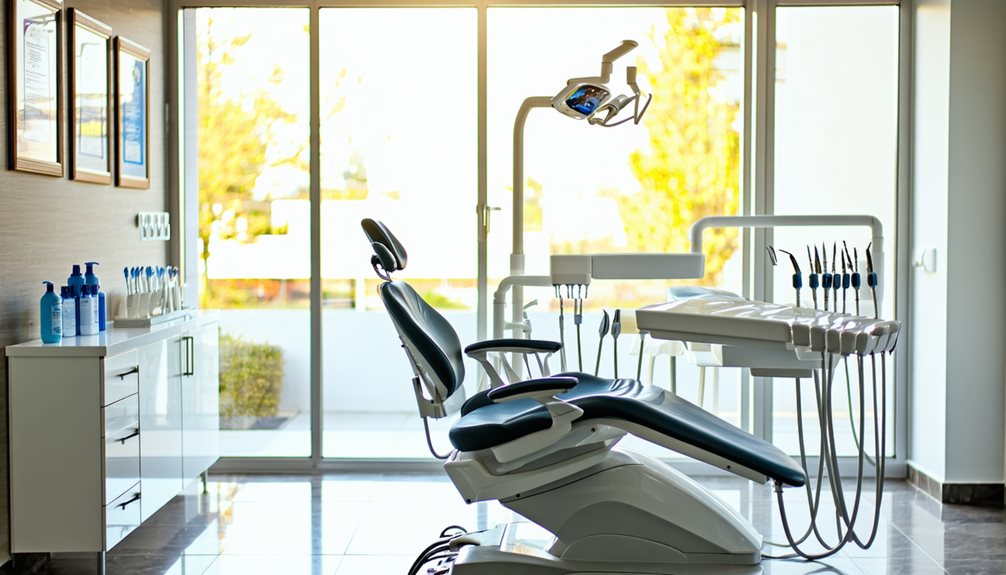
Opting for top orthodontists for jaw alignment provides access to exceptional expertise in maxillofacial anatomy, ensuring precise and effective treatment outcomes. These specialists use advanced imaging technologies such as CBCT for thorough diagnostics, allowing them to create accurate, personalized care plans. Innovative tools like clear aligners and temporary anchorage devices offer discreet and effective solutions. Continuous advancements in software platforms promote active patient engagement and personalized care. The benefits extend beyond the treatment phase, reducing the risk of chronic conditions while enhancing facial aesthetics and self-esteem. Exploring this further will illuminate the profound advantages of choosing the best expertise.
Expertise in Jaw Alignment
When evaluating orthodontists for ideal jaw alignment, their expertise in this specialized field is paramount. The precision required for effective jaw alignment techniques mandates a deep understanding of the anatomical intricacies of the maxillofacial region.
Top orthodontists employ a multifaceted approach, utilizing cutting-edge diagnostic tools such as 3D imaging and digital modeling to meticulously plan treatment pathways. This guarantees that each patient’s unique anatomical structure is respected, optimizing functional and aesthetic outcomes.
Orthodontic treatment options have evolved considerably, offering innovative solutions for complex jaw discrepancies. Among these, custom-fabricated appliances and clear aligners represent a leap forward, allowing for more precise adjustments with reduced discomfort.
The integration of technology, such as computer-aided design and manufacturing (CAD/CAM), has revolutionized the design and implementation of these appliances, ensuring that they cater to the specific needs of each patient.
Furthermore, the continuous advancement in orthodontic methodologies highlights the importance of selecting practitioners who are not only adept in traditional modalities but are also pioneers in the adoption of emerging technologies.
This guarantees that patients receive the most effective, efficient, and innovative care, tailored to their specific jaw alignment requirements.
Advanced Treatment Techniques
In the domain of jaw alignment, advanced treatment techniques are characterized by innovative alignment solutions and the integration of cutting-edge orthodontic technology.
These approaches facilitate precise adjustments and improved outcomes through the use of digital imaging, 3D printing, and computer-aided design systems.
Selecting an orthodontist who employs these modern methodologies guarantees patients receive efficient, effective, and personalized care.
Innovative Alignment Solutions
A multitude of advanced treatment techniques in orthodontics have revolutionized the approach to jaw alignment, offering patients more efficient and effective solutions. Among these innovations, clear aligners and functional appliances stand out as pivotal tools in the orthodontist’s arsenal.
Clear aligners, known for their discreet appearance and comfort, provide a customizable and adaptable method for correcting misaligned jaws. They employ a series of specially crafted, transparent trays that gradually shift teeth into the desired position, without the aesthetic and physical drawbacks of traditional braces. These aligners can be particularly beneficial for those seeking minimally invasive treatments with ideal precision.
Functional appliances, on the other hand, are designed to modify jaw positioning by influencing growth and development, particularly beneficial during a patient’s formative years. These devices can realign the jaws by harnessing natural growth patterns, effectively addressing skeletal discrepancies.
Cutting-Edge Orthodontic Technology
Leveraging the latest advancements in orthodontic technology, practitioners now employ a suite of sophisticated tools that greatly enhance the precision and efficacy of jaw alignment procedures.
Central to this technological evolution is the adoption of digital orthodontics, which facilitates a transformative shift from traditional practices. By utilizing 3D imaging and computer-aided design, orthodontists can now create highly detailed models of the patient’s jaw structure. This allows for the accurate planning and customization of treatment strategies, ensuring ideal alignment outcomes.
Incorporating digital orthodontics also greatly contributes to patient comfort. Techniques such as intraoral scanning eliminate the need for uncomfortable traditional impressions, streamlining the diagnostic process and minimizing patient discomfort.
In addition, advanced software solutions enable real-time adjustments and simulations, allowing practitioners to make precise modifications without the need for invasive procedures.
The integration of cutting-edge orthodontic technology not only enhances treatment accuracy but also considerably reduces treatment times. By employing these advanced tools, top orthodontists can provide more predictable results, thereby fostering greater patient satisfaction.
As the field of orthodontics continues to embrace innovation, these technological advancements stand at the forefront of delivering superior care in jaw alignment procedures.
Personalized Care Plans
When selecting an orthodontist for jaw alignment, one of the critical factors to take into account is the implementation of personalized care plans. In the sphere of orthodontics, the integration of individualized strategies is paramount for enhancing treatment outcomes. Each patient presents unique anatomical and functional variables, necessitating a tailored approach to effectively address specific needs. The utilization of patient feedback is instrumental in refining these strategies, ensuring that the care plan evolves in response to the patient’s experience and progress.
Orthodontists who prioritize personalized care plans systematically gather and analyze patient feedback to adapt treatment protocols. This iterative process involves evaluating the efficacy of interventions and making necessary adjustments to align with the patient’s evolving condition. The commitment to individualized strategies not only enhances the precision of care but also fosters patient engagement and satisfaction, as they become active participants in their treatment journey.
Moreover, personalized care plans underscore the orthodontist’s investment in achieving ideal jaw alignment with minimal discomfort and maximal efficiency. This approach reflects a paradigm shift from generic treatment models to a more sophisticated, patient-centered methodology.
Cutting-Edge Technology
In the domain of jaw alignment, cutting-edge technology plays a pivotal role in enhancing treatment outcomes.
Orthodontists utilize advanced imaging techniques to obtain detailed anatomical insights, facilitating precision treatment planning tailored to individual needs.
Additionally, innovative orthodontic devices are employed to guarantee efficient and effective correction of misalignments, thereby optimizing patient satisfaction and clinical success.
Advanced Imaging Techniques
Orthodontists at the forefront of jaw alignment treatments increasingly utilize advanced imaging techniques to enhance diagnostic accuracy and treatment planning. Central to these advancements is the utilization of 3D imaging technology, which offers an unparalleled view of a patient’s craniofacial structure.
Unlike traditional two-dimensional X-rays, 3D imaging provides extensive volumetric data, allowing orthodontists to visualize the intricate landmarks of the jaw and surrounding structures with exceptional clarity. This level of detail is vital for identifying complex dental and skeletal discrepancies that might otherwise go unnoticed.
Digital diagnostics further complement this by integrating data from 3D imaging into sophisticated software platforms.
The precision offered by digital diagnostics allows for the detection of subtle abnormalities and aids in crafting a tailored treatment approach that addresses the unique anatomical considerations of each patient.
The integration of cutting-edge imaging techniques guarantees that top orthodontists remain at the vanguard of jaw alignment, offering patients a more precise and thorough understanding of their orthodontic needs, ultimately leading to more effective and efficient treatment outcomes.
Precision Treatment Planning
Precision-driven treatment planning in orthodontics leverages cutting-edge technology to enhance the accuracy and efficiency of jaw alignment procedures.
The utilization of 3D modeling and simulations enables practitioners to visualize outcomes prior to intervention, thereby refining the decision-making process. This foresight allows for adjustments that accommodate individual anatomical variations, ensuring personalized care.
Sophisticated software platforms facilitate patient collaboration, empowering individuals to engage actively in their treatment journey. Through visual representations and detailed projections, patients gain a thorough understanding of the proposed interventions and their anticipated outcomes.
This collaboration is pivotal in aligning treatment goals between practitioners and patients, fostering a partnership that is essential for successful orthodontic outcomes.
Furthermore, precision treatment planning minimizes the margin for error, greatly enhancing the predictability of results. By employing data-driven methodologies, orthodontists can reduce treatment durations and improve procedural efficiency.
This technology-driven approach not only meets the demands of modern orthodontics but also paves the way for innovative practices that prioritize patient satisfaction and clinical excellence. Hence, selecting top orthodontists skilled in precision planning is indispensable for achieving ideal jaw alignment.
Innovative Orthodontic Devices
Revolutionizing the field of orthodontics, cutting-edge devices have ushered in unprecedented advancements in jaw alignment procedures. These innovative approaches leverage state-of-the-art technology, providing orthodontists with enhanced tools to address complex anatomical challenges effectively. Among these, 3D imaging systems and digital scanning devices stand out, offering precise mapping of jaw discrepancies that guide the creation of tailored treatment plans.
The integration of these technologies guarantees device effectiveness by utilizing data-driven insights to customize appliances like clear aligners and lingual braces. Clear aligners, for instance, employ advanced materials that apply consistent, gentle force, facilitating gradual jaw correction with minimal discomfort.
Lingual braces, placed discreetly behind the teeth, utilize CAD/CAM technology to guarantee precise fit and improved force distribution, contributing to efficient alignment outcomes.
Furthermore, temporary anchorage devices (TADs) represent another leap in innovative approaches. These mini-implants provide stable anchorage points, enhancing control over tooth movement and enabling more predictable jaw alignment results.
Comprehensive Diagnostic Tools
Frequently, the cornerstone of effective jaw alignment treatment lies in the utilization of thorough diagnostic tools. These tools enable top orthodontists to conduct precise diagnostic assessments, which are essential for developing tailored treatment plans.
Advanced imaging modalities, such as cone beam computed tomography (CBCT) and digital cephalometrics, provide extensive insights into the craniofacial structure, offering high-resolution, three-dimensional views that surpass traditional two-dimensional X-rays. These technological advancements allow for a meticulous evaluation of bone morphology, dental alignment, and soft tissue considerations, thereby ensuring an accurate diagnosis.
The integration of cutting-edge imaging modalities into diagnostic protocols not only enhances the precision of alignment strategies but also informs the selection of ideal orthodontic devices. By understanding the spatial relationships of dental and skeletal components, orthodontists can anticipate potential complications and adapt treatment plans accordingly.
This level of diagnostic sophistication is indispensable for addressing complex cases involving jaw misalignment, contributing to improved functional and aesthetic outcomes.
Moreover, these diagnostic assessments facilitate interdisciplinary collaboration, allowing orthodontists to work seamlessly with other specialists, such as oral surgeons and prosthodontists, to deliver extensive care.
Ultimately, the adoption of thorough diagnostic tools underscores a commitment to innovation and excellence in orthodontic practice.
Long-Term Treatment Benefits
Building on the foundation of extensive diagnostic tools, the long-term benefits of effective jaw alignment treatments are substantial and multifaceted. Proper jaw alignment is not merely a cosmetic enhancement; it plays an essential role in maintaining long-term health.
Misaligned jaws can lead to chronic conditions such as temporomandibular joint disorders (TMJ), sleep apnea, and uneven tooth wear, all of which can degrade quality of life over time. By choosing top orthodontists, patients receive innovative interventions that address these issues, thereby reducing the risk of such complications.
Beyond health implications, achieving ideal jaw alignment greatly contributes to improved confidence. A well-aligned jaw enhances facial symmetry, which is often perceived as more aesthetically pleasing. This can lead to increased self-esteem and more positive social interactions, influencing both personal and professional aspects of life.
Additionally, the psychological benefits of improved confidence should not be underestimated, as they can motivate individuals to pursue broader opportunities and embrace change.
Frequently Asked Questions
What Are the Common Signs of Jaw Misalignment?
Common signs of jaw misalignment include persistent jaw pain, bite issues such as overbites or underbites, difficulty chewing, and uneven wear on teeth. These symptoms may lead to complications, necessitating innovative orthodontic interventions for effective correction.
How Can Jaw Alignment Issues Impact Overall Health?
Jaw alignment issues can markedly impact overall health by disrupting jaw health and dental alignment, leading to complications such as temporomandibular joint disorders, chronic headaches, and impaired chewing efficiency, ultimately affecting nutritional intake and systemic health.
Are There Non-Surgical Options for Correcting Jaw Alignment?
Non-surgical options for correcting jaw alignment include the use of clear aligners and orthodontic appliances. These innovative solutions effectively reposition the jaw, enhancing symmetry and function without invasive procedures, consequently appealing to patients seeking advanced, minimally invasive treatments.
How Long Does the Jaw Alignment Treatment Typically Take?
The treatment duration for jaw alignment varies, typically ranging from several months to two years, depending on individual patient experiences. This timeframe is influenced by specific orthodontic techniques and patient compliance with prescribed regimens, ensuring ideal outcomes.
What Are the Costs Associated With Jaw Alignment Treatments?
The costs associated with jaw alignment treatments can vary considerably. Treatment affordability depends on several factors, including the complexity of the case and geographical location. Insurance coverage may mitigate expenses, but thorough verification with providers is essential for accurate financial planning.
Conclusion
Selecting top orthodontists for jaw alignment is critical due to their expertise in advanced treatment techniques and personalized care plans. The utilization of cutting-edge technology and thorough diagnostic tools guarantees precise diagnosis and effective treatment strategies. Such expertise not only addresses immediate alignment concerns but also offers long-term treatment benefits, enhancing overall oral health. Consequently, the employment of highly skilled orthodontists is essential for achieving ideal jaw alignment outcomes and guaranteeing sustained dental well-being.

