
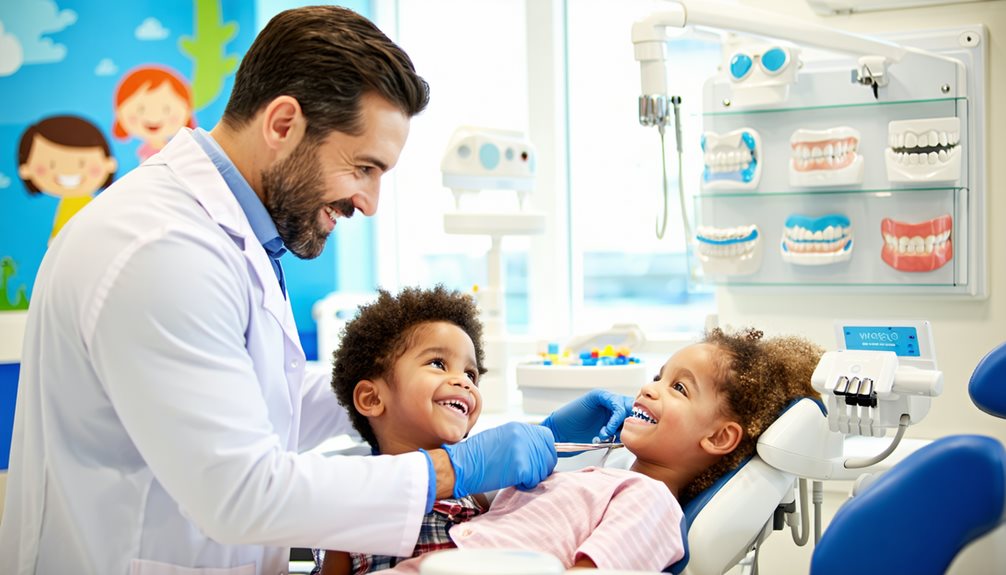
Choosing top family-friendly orthodontists involves evaluating thorough treatment options and provider qualifications. Ideal solutions include traditional metal, ceramic, and lingual braces, alongside clear aligners designed for teens. Pediatric expertise guarantees appropriate early intervention for conditions like malocclusion. Treatment personalization through 3D imaging and digital scanning enhances diagnostic precision. Family-centric practices may offer affordable family plans and convenient office locations with flexible scheduling, accommodating busy family routines. A welcoming atmosphere and advanced technology integration, such as telehealth, promote quality care and patient satisfaction. Explore more to guarantee your family’s orthodontic needs are met with excellence and innovation.
Comprehensive Braces Solutions
When it comes to extensive braces solutions, orthodontists offer a variety of options tailored to meet the diverse needs of patients. Thorough treatment plans are crafted with precision, ensuring that each patient receives the most effective and efficient path to achieving ideal dental alignment.
Traditional metal braces, ceramic braces, and lingual braces are among the diverse solutions available, each with unique attributes designed to address specific orthodontic challenges.
The focus of any thorough treatment is not just on achieving aesthetic improvements but also on enhancing overall oral health. These treatments are meticulously planned, considering factors such as bite correction, jaw alignment, and long-term stability.
As technology advances, orthodontists are increasingly integrating digital imaging and 3D modeling to refine treatment outcomes, making the process more predictable and less invasive.
Braces maintenance plays a critical role in ensuring the success of these thorough solutions. Patients are educated on the importance of maintaining oral hygiene and adhering to specific dietary guidelines to prevent complications.
Regular follow-ups are essential, allowing orthodontists to monitor progress and make necessary adjustments. Ultimately, thorough braces solutions exemplify a commitment to delivering patient-centered care through innovative, meticulous, and personalized orthodontic strategies.
Clear Aligners for Teens
Clear aligners present a discreet and comfortable alternative to traditional braces, offering significant benefits for teenage patients concerned with aesthetics and convenience.
Selecting the right orthodontic provider is essential in guaranteeing a successful treatment outcome, as it involves factors such as expertise, technology, and patient support services.
Benefits of Clear Aligners
Teenage orthodontic treatment can greatly benefit from the innovative technology of clear aligners, offering a discreet and effective solution for dental correction. These advanced systems provide clear aligner advantages by utilizing a series of custom-made, virtually invisible trays to gradually shift teeth into their desired positions.
This form of invisible orthodontics guarantees that the aesthetic appeal of a teen’s smile is maintained throughout the treatment process, a factor that is often paramount during these formative years.
Clear aligners deliver numerous benefits that appeal to both patients and orthodontists. The removability of clear aligners offers a significant advantage in promoting superior oral hygiene, as they allow for easy brushing and flossing, reducing the risk of plaque accumulation and gum disease.
Additionally, the absence of metal brackets and wires translates to a reduced likelihood of oral abrasions and discomfort, enhancing the overall patient experience.
For teens involved in sports or other extracurricular activities, clear aligners provide the flexibility and convenience necessary to accommodate an active lifestyle.
The precision engineering of these aligners guarantees efficient tooth movement, typically resulting in shorter treatment durations compared to traditional braces, consequently aligning with the desires of a technology-driven generation seeking fast and effective solutions.
Choosing the Right Provider
Selecting the appropriate provider for clear aligners is a pivotal step in ensuring successful orthodontic outcomes for teenagers. The decision-making process should be anchored by a thorough examination of provider qualifications.
Prospective patients should seek orthodontists with specialized training in clear aligner technology and a proven track record in adolescent care. Board certification and ongoing education are critical indicators of a provider’s commitment to maintaining cutting-edge skills and knowledge in this rapidly advancing field.
Patient reviews are an invaluable resource for evaluating the quality of care provided. They offer insights into the provider’s approachability, communication style, and the overall patient experience.
Positive feedback from teen patients and their families can highlight a provider’s ability to effectively engage younger patients, fostering a comfortable and supportive treatment environment.
Innovation-driven patients will benefit from providers who incorporate the latest advancements in clear aligner technology, such as 3D imaging and digital treatment planning. These tools enhance precision in treatment design, optimizing outcomes.
Ultimately, choosing the right provider involves balancing technical expertise with a patient-centered approach, ensuring that teens receive the most effective and comfortable orthodontic experience available.
Pediatric Orthodontic Expertise
When it comes to pediatric orthodontic expertise, a thorough understanding of the unique dental needs of children is paramount. This specialization requires proficiency in conducting extensive pediatric assessments that identify dental irregularities early on. Such assessments are critical for formulating tailored treatment plans that address the developmental stages of a child’s dentition.
Early intervention is a cornerstone of pediatric orthodontics, as it can mitigate potential complications and streamline future treatments.
Incorporating innovative diagnostic tools and techniques, such as digital imaging and 3D modeling, enhances the precision of pediatric assessments.
In addition, early intervention not only improves oral function but also contributes remarkably to the psychological well-being of young patients by enhancing their self-esteem through improved aesthetics.
Affordable Family Plans
A thorough approach to orthodontic care often includes considering the financial aspects for families.
With innovative solutions and a patient-centric focus, many orthodontic practices are now offering affordable family plans that cater to diverse financial needs.
These plans are designed to guarantee that quality care is accessible without compromising the family budget.
Here are four key elements to look for in these plans:
-
Family Discounts: Practices often provide discounts for multiple family members undergoing treatment, which can greatly reduce the overall cost of orthodontic care.
-
Flexible Payment Options: Innovative budget plans that allow families to spread the cost over time, making it easier to manage expenses without financial strain.
-
Comprehensive Coverage: Plans that include a wide range of treatments—from braces to aligners—guaranteeing that every member of the family has access to necessary orthodontic care.
-
Tailored Financial Consultations: Personalized consultations to develop a budget-friendly plan tailored to individual family circumstances, fostering a supportive financial experience.
Convenient Office Locations
In the pursuit of delivering accessible care, family-friendly orthodontists prioritize strategically located offices to enhance patient convenience.
By offering multiple branches, these practices guarantee that families can easily access high-quality orthodontic services without significant travel burdens.
Such strategic placement underscores a commitment to patient-centered care, effectively catering to the diverse geographical needs of the community.
Easy Accessibility
Many families prioritize convenient office locations when choosing an orthodontist, as accessibility plays an essential role in maintaining consistent treatment schedules. An orthodontic practice that emphasizes easy accessibility offers numerous advantages for busy families seeking innovative care solutions.
The integration of technology, such as online consultations, enables patients to engage with specialists without the need for frequent in-office visits, streamlining the initial assessment and follow-up processes. Flexible scheduling further enhances accessibility, allowing parents to coordinate appointments around school and extracurricular activities seamlessly.
To effectively cater to the modern family’s needs, orthodontic practices should consider the following accessibility-enhancing strategies:
-
Online Consultations: Implementing virtual consultations provides convenience, allowing families to discuss treatment plans and progress from the comfort of their homes.
-
Flexible Scheduling: Offering appointments outside traditional office hours, including weekends and evenings, accommodates diverse family schedules.
-
Centralized Locations: Practices situated near major transit routes or community hubs minimize travel time, facilitating easier access for patients.
-
User-Friendly Appointment Platforms: Innovative digital systems for booking and managing appointments enhance the patient experience, providing a streamlined and efficient process.
Multiple Branches Available
Building on the importance of accessibility, the availability of multiple branches for an orthodontic practice greatly enhances convenience for families. In the fast-paced world of modern healthcare, patients demand flexibility and ease of access.
Orthodontic practices that strategically establish branch locations across various geographical areas cater to this demand, thereby optimizing patient engagement and satisfaction. By offering multiple sites, these practices provide families with the opportunity to select the most suitable location that aligns with their schedules and transportation needs.
The presence of diverse branch locations not only facilitates a seamless integration of orthodontic care into daily family routines but also strengthens a practice’s ability to deliver thorough family services. This decentralized approach guarantees that state-of-the-art treatment options are within reach, thereby minimizing travel time and reducing logistical burdens for families.
Additionally, each branch is often equipped with sophisticated technologies and staffed by highly qualified professionals, maintaining consistent care quality across all locations.
For families seeking innovative orthodontic solutions, the availability of multiple branches signifies a commitment to patient-focused care delivery. This model exemplifies adaptability, allowing practices to address evolving patient needs while enhancing overall treatment accessibility and efficiency.
Personalized Treatment Approaches
Through the lens of modern orthodontics, personalized treatment approaches have become integral to ensuring ideal outcomes for patients of all ages. Customized care begins with individual assessments, where orthodontists meticulously evaluate the unique dental structures and needs of each patient. This thorough evaluation allows for the design of a tailored plan that can adapt to the nuances of a patient’s oral health.
Innovative orthodontic practices now employ cutting-edge technologies and methodologies to enhance personalized treatment, such as:
-
3D Imaging and Digital Scanning****: These techniques offer precise visualizations of a patient’s dental anatomy, facilitating accurate diagnosis and planning.
-
Customized Aligners: Advances in materials science have led to the development of aligners that are molded specifically for the patient’s teeth, ensuring a comfortable and effective fit.
-
Smart Orthodontic Devices: Devices equipped with sensors can monitor progress in real-time, allowing orthodontists to make timely adjustments to the treatment plan.
-
Patient-Centric Software: This technology enables seamless communication and feedback between patients and practitioners, ensuring that treatment plans are adaptive and responsive.
Orthodontic care that emphasizes personalization not only enhances the efficacy of treatment but also elevates the patient experience, making it essential for family-friendly orthodontic practices.
Frequently Asked Questions
How Can Orthodontic Treatment Improve My Child’s Self-Esteem and Confidence?
Orthodontic treatment can greatly enhance a child’s self-image by aligning teeth, fostering positive social interactions. Improved dental aesthetics boost confidence, encouraging active participation in social settings, which is essential for psychological development and overall well-being.
At What Age Should My Child First Visit an Orthodontist for Evaluation?
Children should undergo an orthodontic evaluation by age seven to identify early signs of potential dental issues. Early assessment allows for timely intervention, leveraging innovative techniques to guarantee ideal oral health and development, enhancing patient-focused care.
Are There Any Dietary Restrictions During Orthodontic Treatment?
Orthodontic treatment necessitates dietary modifications to guarantee appliance integrity and oral health. Patients are advised to avoid hard, sticky, or chewy food choices, encouraging a focus on softer alternatives to prevent damage and facilitate ideal treatment outcomes.
How Do Orthodontists Handle Emergency Situations Like Broken Wires or Brackets?
Orthodontists manage emergencies such as broken brackets by implementing emergency protocols, ensuring immediate assessment and timely repair. This patient-focused approach utilizes innovative techniques to minimize discomfort and maintain treatment progress, while emphasizing rapid response and efficient solutions.
Can Orthodontic Treatment Help With Sleep Apnea in Children?
Orthodontic intervention can potentially address sleep apnea in children by correcting jaw alignment or expanding the palate, thereby improving airway patency. Such innovative treatments may alleviate symptoms, enhancing overall sleep quality and contributing to better health outcomes.
Conclusion
In evaluating orthodontic care, the emphasis on thorough braces solutions and clear aligners for adolescents is paramount. Pediatric orthodontic expertise underscores the importance of age-appropriate interventions. Affordable family plans enhance accessibility, while strategically located offices guarantee convenience. Personalized treatment approaches are tailored to individual patient needs, optimizing outcomes. Collectively, these elements contribute to a patient-focused orthodontic experience, reflecting a commitment to both clinical excellence and the holistic well-being of families seeking orthodontic care.

