
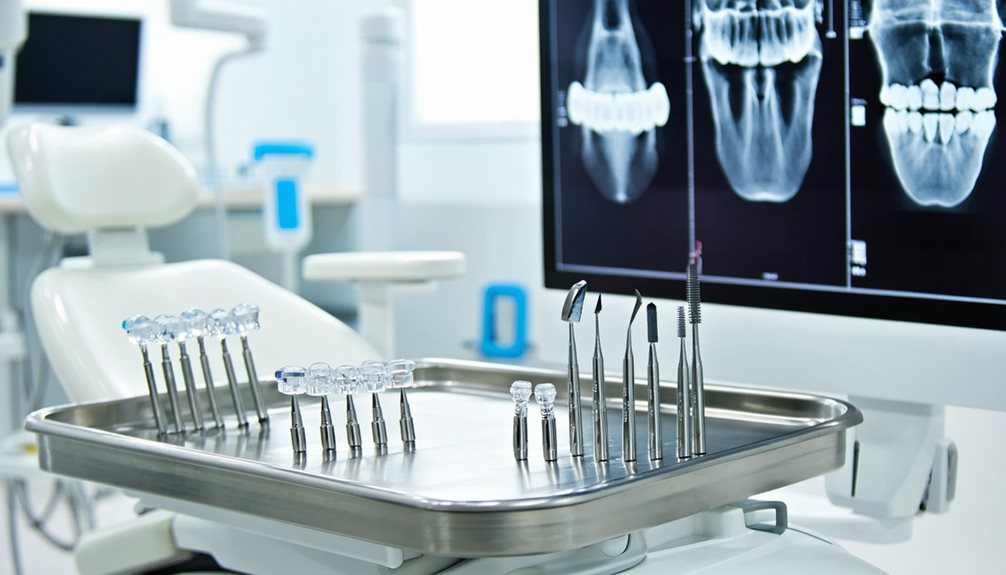
Orthodontic solutions incorporate a range of treatments designed to address various dental alignment needs efficiently. Invisalign clear aligners offer a discreet, removable option created with precise 3D imaging. Traditional metal braces, known for durability and effectiveness, suit complex malocclusions. Ceramic braces provide aesthetic appeal, while lingual braces offer subtlety by affixing to the teeth’s tongue-facing side. Self-ligating braces reduce friction and improve hygiene. Accelerated techniques like micro-osteoperforation and photobiomodulation expedite treatment duration without sacrificing efficacy. Financial considerations and patient compliance are crucial factors in deciding the best solution. Exploring detailed aspects of each method could offer further insights.
Invisalign Clear Aligners
Invisalign’s clear aligners represent a significant advancement in orthodontic treatment, utilizing cutting-edge technology to provide a discreet and effective solution for teeth alignment. The treatment process involves a series of custom-fabricated thermoplastic aligners, each incrementally adjusting dental positioning.
The aligners are engineered using 3D imaging technology, which allows for precise mapping of the patient’s dental architecture. This meticulous design contributes to the balance between aesthetic appeal and functional efficacy, a hallmark of Invisalign‘s innovation.
Among the primary Invisalign benefits is the aligners’ removability, which affords patients improved oral hygiene compared to traditional fixed appliances. Patients can maintain their regular dental care routine, reducing the risk of periodontal complications.
In addition, the transparency of the aligners enhances patient compliance, as the aligners are virtually invisible, catering to those who prioritize discretion in their orthodontic journey.
Clinically, the treatment process begins with a thorough assessment, followed by the development of a personalized treatment plan. The aligners are worn for approximately 20-22 hours a day and replaced bi-weekly, gradually guiding teeth into desired positions.
Evidence-based studies underscore the efficacy of Invisalign in correcting mild to moderate malocclusions, while ongoing innovations continue to expand its applicability.
Traditional Metal Braces
Traditional metal braces remain a cornerstone in orthodontic treatment due to their unparalleled durability and proven effectiveness in correcting complex malocclusions.
With their robust construction, these braces apply consistent and precise force, facilitating ideal tooth alignment over time.
Moreover, metal braces are often a more cost-effective solution compared to other orthodontic options, making them accessible to a wider range of patients seeking thorough dental correction.
Durability and Effectiveness
Metal braces, long regarded as the cornerstone of orthodontic treatment, exhibit both durability and effectiveness in correcting a variety of malocclusions. These appliances offer long-term reliability, attributed to their robust stainless-steel composition, which withstands the mechanical forces applied during tooth movement. This structural integrity contributes to treatment longevity, ensuring consistent results over extended periods.
Clinical studies have demonstrated that metal braces are effective in addressing complex cases, including severe crowding and misalignment, due to their ability to apply precise and continuous pressure on teeth.
The effectiveness of traditional metal braces is evident in their track record of successful outcomes. Unlike removable aligners, metal braces are fixed appliances, which eliminates patient compliance issues and enhances the predictability of results.
The brackets and archwires are designed to optimize force distribution, facilitating efficient tooth movement. Innovations in bracket design, such as self-ligating systems, have further enhanced the functionality of metal braces, reducing treatment time and discomfort.
Cost and Affordability
Affordability remains a critical consideration in orthodontic treatment planning, particularly when evaluating traditional metal braces. The financial implications often dictate patient compliance and accessibility to necessary orthodontic care.
Traditional metal braces, being one of the most time-tested and reliable modalities, offer a cost-effective solution compared to more contemporary alternatives. Despite their lower initial cost, the financial burden can be further alleviated through strategic insurance coverage and flexible payment plans.
Insurance coverage for traditional metal braces is generally more extensive, reflecting their established efficacy and widespread use. Many insurance providers offer partial or full reimbursements for these braces, reducing out-of-pocket expenses for patients. It is imperative for patients and practitioners alike to thoroughly review policy specifics to optimize coverage benefits.
Innovative payment plans have emerged as a pivotal tool in enhancing affordability. Orthodontic practices frequently offer customizable financing options, enabling patients to distribute the cost over an extended period rather than incurring a substantial one-time expense.
Such plans often include interest-free periods and require minimal down payments, making orthodontic treatment accessible to a broader demographic. As a result, traditional metal braces remain a financially viable option, ensuring equitable access to orthodontic care.
Ceramic Braces
Ceramic braces represent a sophisticated advancement in orthodontic treatment, offering a blend of cosmetic appeal and functional effectiveness. These braces utilize tooth-colored brackets, providing a more discreet appearance compared to traditional metal braces.
The ceramic braces benefits extend beyond aesthetics, encompassing efficiency in tooth alignment and reduced treatment times in certain cases. Their translucency guarantees they blend seamlessly with the patient’s natural tooth color, making them an attractive option for those seeking a less conspicuous orthodontic solution.
Innovative design features of ceramic braces include:
- Aesthetic Appeal: The tooth-colored brackets greatly enhance the visual discreetness of orthodontic treatment.
- Durability: Modern ceramic materials are engineered to resist staining and discoloration, maintaining their appearance over the course of treatment.
- Efficiency in Alignment: Ceramic braces provide effective tooth movement, delivering comparable results to metal braces.
- Patient Comfort: The smooth surface of ceramic brackets minimizes soft tissue irritation, contributing to a more comfortable experience.
However, ceramic braces maintenance is essential to preserve their appearance and functionality.
Regular orthodontic check-ups guarantee ideal treatment progress and bracket integrity, making ceramic braces a compelling choice for innovative orthodontic care.
Lingual Braces
Lingual braces represent an advanced orthodontic technique designed for patients seeking an inconspicuous solution for teeth alignment.
The lingual braces advantages include their ability to achieve complex tooth movements and corrections comparable to conventional braces, while maintaining a hidden profile.
Clinically, lingual braces are highly effective in treating various malocclusions, including crowding, spacing, and bite irregularities. Precision in customization is achieved through digital imaging and CAD/CAM technology, ensuring ideal fit and function.
Despite their aesthetic benefits, lingual braces require meticulous oral hygiene practices. Lingual braces care involves the use of specialized cleaning tools, such as interdental brushes and water flossers, to prevent plaque accumulation and maintain oral health.
Adherence to a stringent care regimen is essential, as the lingual positioning presents challenges in cleaning. Regular dental check-ups and professional cleanings are recommended to monitor progress and address any potential complications.
Self-Ligating Braces
Self-ligating braces revolutionize orthodontic treatment by eliminating the need for elastic or metal ties, relying on specialized brackets that use a sliding mechanism to hold the archwire in place.
This advanced design reduces friction, allowing teeth to move more freely and comfortably, which can lead to shorter treatment durations and fewer adjustments.
In comparison to traditional braces, self-ligating braces present numerous advantages, making them an appealing choice for those seeking innovative orthodontic solutions.
Key self-ligating benefits and comparisons include:
-
Efficiency in Treatment: Clinical studies demonstrate that self-ligating braces often require fewer appointments and shorter treatment times due to their design, which minimizes resistance and friction between bracket and wire.
-
Improved Oral Hygiene: The absence of elastics or ties reduces areas where plaque and bacteria can accumulate, facilitating easier and more effective oral hygiene practices.
-
Enhanced Comfort: Patients frequently report less discomfort with self-ligating systems, attributed to the lower forces applied and smoother bracket designs.
-
Aesthetic Options: Available in both metal and ceramic versions, self-ligating braces offer aesthetic versatility, appealing to patients concerned with the appearance of their orthodontic appliances.
These self-ligating innovations continue to advance the orthodontic field, providing effective, comfortable, and efficient treatment options tailored to modern patient needs.
Accelerated Orthodontics
Accelerated orthodontics encompasses a range of techniques designed to expedite tooth movement and reduce overall treatment time, addressing patient demand for swifter outcomes.
Techniques such as micro-osteoperforation and piezocision have been clinically validated to enhance alveolar bone remodeling, thereby facilitating accelerated orthodontic tooth movement.
Evidence-based studies indicate that these methods, when appropriately applied, can considerably decrease treatment duration while maintaining or even improving treatment efficacy and stability.
Speeding Up Treatment Time
Recent advancements in orthodontic techniques have heralded a shift towards accelerated treatment modalities, considerably reducing the time required for achieving ideal dental alignment. These treatment innovations are designed to enhance efficiency while maintaining or improving treatment outcomes.
One of the pivotal factors in speeding up treatment time is patient compliance, as adherence to prescribed protocols markedly influences the effectiveness of these rapid methods.
To achieve accelerated orthodontic treatment, several approaches can be considered:
-
Micro-osteoperforation: This minimally invasive technique involves creating small perforations in the bone to stimulate an increased biological response, thereby expediting tooth movement.
-
Vibration Therapy: Application of low-frequency mechanical vibrations to the teeth can facilitate faster realignment by enhancing bone remodeling processes.
-
Self-ligating Brackets: These brackets reduce friction between the wire and bracket, allowing teeth to move more freely and reducing overall treatment time.
-
Photobiomodulation Therapy: Utilization of light energy to accelerate cellular activity and promote faster tooth movement is gaining popularity due to its non-invasive nature.
Each of these strategies offers a unique mechanism for reducing treatment duration, providing both clinicians and patients with innovative options tailored to individual needs.
Emphasizing evidence-based methods guarantees that speed and safety are not mutually exclusive.
Techniques for Faster Results
In the domain of accelerated orthodontics, a diverse array of techniques has emerged, each grounded in a robust foundation of clinical research and technical innovation. These accelerated techniques aim to substantially reduce treatment duration while maintaining or enhancing clinical outcomes.
One such technique is micro-osteoperforation, which involves creating small perforations in the bone surrounding the teeth to stimulate bone remodeling and expedite tooth movement. Clinical trials have demonstrated its efficacy, highlighting a reduction in treatment time by up to 62% in specific cases.
Another treatment innovation is the application of low-level laser therapy (LLLT). This non-invasive procedure uses laser light to enhance cellular activity in periodontal tissues, thereby accelerating the physiological processes involved in tooth movement. Evidence from randomized controlled trials supports its effectiveness in reducing treatment timelines.
Moreover, vibrational therapy, utilizing devices such as AcceleDent, delivers gentle pulsations to the dentition. This method is designed to optimize orthodontic force application, thereby facilitating faster tooth movement. Studies suggest a potential reduction of treatment time by up to 50%.
These innovations reflect a paradigm shift in orthodontics, where accelerated techniques are increasingly adopted to meet patient demands for shorter treatment durations without compromising precision and effectiveness.
Frequently Asked Questions
How Do Orthodontic Solutions Affect Oral Hygiene Routines?
Orthodontic solutions necessitate modified oral hygiene routines, emphasizing advanced brushing techniques to navigate around appliances. Flossing challenges arise due to brackets and wires, requiring innovative tools such as interdental brushes and water flossers to maintain peak oral health effectively.
Can Orthodontic Treatments Cause Any Long-Term Jaw Pain?
Orthodontic treatments may result in long-term jaw pain if jaw alignment is improperly managed. Evidence-based approaches emphasize precise diagnosis and treatment planning, while innovative pain management techniques can mitigate discomfort, ensuring ideal alignment and patient satisfaction.
Are There Orthodontic Solutions Suitable for People With Metal Allergies?
For individuals with metal allergies, orthodontic solutions such as metal-free braces, including ceramic or clear aligners, are recommended. These alternatives utilize allergy-friendly materials, offering effective treatment while mitigating hypersensitivity reactions, consequently ensuring patient comfort and safety.
What Is the Cost Comparison Between Different Orthodontic Treatments?
The cost comparison between orthodontic treatments involves evaluating cost factors such as materials, treatment duration, and complexity. Insurance coverage varies, often impacting out-of-pocket expenses. Technological advancements in orthodontics can influence both cost and treatment efficacy.
How Do Orthodontic Solutions Impact Speech During Treatment?
Orthodontic solutions can temporarily affect speech clarity due to appliance placement, with impacts varying by treatment type and duration. Evidence suggests that speech adaptation typically occurs within weeks, depending on individual variability and the specific orthodontic device used.
Conclusion
Orthodontic solutions are diverse, each offering unique benefits tailored to specific patient needs. Invisalign clear aligners provide a discreet option with convenience, while traditional metal braces remain effective for complex cases. Ceramic braces offer aesthetic appeal, whereas lingual braces cater to those seeking invisibility. Self-ligating braces reduce treatment time and discomfort, and accelerated orthodontics employs advanced techniques to expedite results. Clinicians should consider individual patient requirements, treatment goals, and evidence-based outcomes when recommending an ideal orthodontic solution.

