
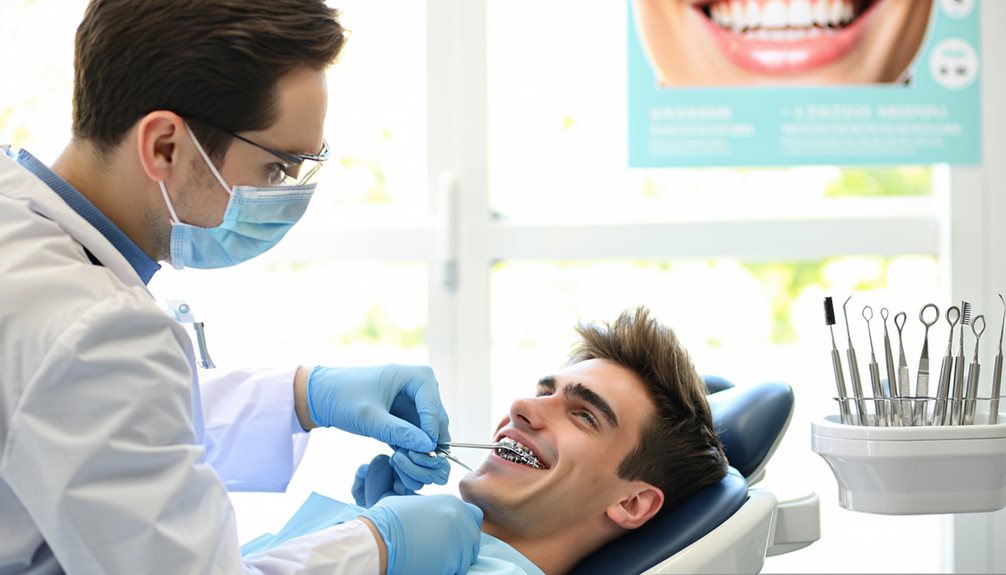
Choosing a top orthodontist for teen braces requires evaluating credentials, expertise, and communication skills to guarantee a seamless treatment journey. Verify their dental degree, orthodontic residency, and continuous education achievements. Review their experience with adolescent cases and membership in professional organizations, which showcases a commitment to state-of-the-art practices. Understanding different treatment options such as metal braces, clear aligners, and ceramic braces helps in selecting the best fit for your teen’s lifestyle. Addressing potential discomfort through orthodontic wax and dietary advice is essential. For a thorough view, consider early intervention benefits, offering improved outcomes and cost efficiency. Explore further insights on managing the orthodontic experience effectively.
Understanding Teen Braces
In the domain of orthodontics, understanding teen braces is fundamental for both patients and practitioners seeking ideal oral health outcomes. As adolescents navigate the transformative phase of orthodontic treatment, it is essential to dispel prevalent braces myths that can misguide perceptions and expectations. One such myth suggests that braces are painful throughout the entire treatment process. In reality, discomfort is typically transient, occurring mainly during adjustment periods. Emphasizing accurate information can enhance cooperation and compliance, vital for successful treatment results.
Equally important is acknowledging the emotional support necessary during this journey. Adolescents, often sensitive to peer opinions, may experience anxiety or self-consciousness about wearing braces. Providing emotional support can mitigate these concerns, fostering a positive outlook towards the treatment. This support can be facilitated through open communication, where orthodontists and families work collaboratively to address any emotional hurdles.
Moreover, embracing innovative technologies in orthodontics, such as clear aligners and self-ligating braces, can further refine the teen braces experience. These advancements not only enhance comfort and aesthetics but also cater to a generation driven by technological progression.
Choosing the Right Orthodontist
Selecting the right orthodontist for teen braces requires careful consideration of several key factors.
The credentials and experience of the orthodontist are paramount, ensuring they possess the requisite skills and knowledge to deliver ideal care.
Additionally, evaluating the technology and treatment options available, alongside reviewing the communication style and comfort level experienced during consultations, is critical to making an informed decision.
Credentials and Experience Matter
When choosing an orthodontist for teen braces, understanding the significance of credentials and experience is crucial. A detailed qualifications assessment should be the cornerstone of this decision-making process.
Orthodontists must have completed a dental degree followed by an orthodontic residency, often culminating in a certification from a recognized board, such as the American Board of Orthodontics. Evaluating these credentials guarantees that the practitioner possesses the foundational knowledge and is up-to-date with the latest advancements in orthodontic care.
Experience evaluation is equally critical. It involves examining the orthodontist’s history of treating cases similar to your teen’s specific needs. An orthodontist with a robust portfolio of successfully managed cases is more likely to provide innovative solutions tailored to individual requirements.
Additionally, years of practice often correlate with refined technical skills and the ability to anticipate and mitigate potential complications.
In addition to credentials and experience, consider the orthodontist’s commitment to continuing education and involvement in professional organizations. These factors often reflect a dedication to maintaining high standards and integrating cutting-edge techniques into their practice.
Ultimately, a thorough evaluation of both credentials and experience will guide you in selecting an orthodontist capable of delivering top-notch care and innovative treatment for your teen.
Technology and Treatment Options
With myriad technological advancements reshaping orthodontic care, selecting an orthodontist who utilizes cutting-edge technology and diverse treatment options is essential.
In today’s rapidly evolving landscape, digital advancements such as 3D imaging, intraoral scanners, and computer-aided design and manufacturing (CAD/CAM) systems have revolutionized the field. These technologies enable orthodontists to craft highly precise treatment plans, ensuring ideal alignment and aesthetic outcomes for young patients.
Innovative treatments like clear aligners, self-ligating braces, and lingual braces offer teens more discreet and comfortable options compared to traditional metal braces.
Clear aligners, for instance, leverage advanced software to create customized, sequential aligners that gradually shift teeth into their desired positions. Self-ligating braces minimize friction, enhancing comfort and reducing treatment time, while lingual braces are affixed to the back of the teeth, rendering them virtually invisible.
Choosing an orthodontist proficient in these digital advancements and innovative treatments can greatly impact the orthodontic experience and outcomes.
A forward-thinking practitioner not only stays abreast of emerging technologies but also integrates them into practice, offering tailored solutions that align with each patient’s unique needs. Such an orthodontist is well-equipped to deliver the high-quality care vital for today’s discerning patients.
Communication and Comfort Level
Establishing effective communication and guaranteeing a comfortable atmosphere are paramount when selecting an orthodontist for teen braces. Open dialogue fosters trust and guarantees that concerns are addressed promptly.
An orthodontist who prioritizes communication is more likely to engage in detailed consultations, explaining procedures in a manner that is both understandable and reassuring. This approach not only enhances the patient’s comfort level but also allows for the incorporation of patient feedback into the treatment plan, optimizing outcomes.
To aid in identifying an orthodontist adept at fostering communication and comfort, consider the following:
- Initial Consultation: Does the orthodontist take the time to explain treatment options and answer questions thoroughly?
- Open Dialogue: Are there clear channels for ongoing communication, such as email or patient portals, for addressing concerns outside of appointments?
- Patient Feedback: Is there a system in place for collecting and responding to patient feedback to continuously improve the quality of care?
- Comfortable Environment: Does the office atmosphere, including design and staff interactions, make teens feel at ease during visits?
Selecting an orthodontist who excels in these areas guarantees that the treatment journey is not only effective but also supportive and empowering for the teen.
Exploring Treatment Options
When considering orthodontic treatment options for teenagers, it is essential to understand the various types of braces available, including traditional metal braces, ceramic braces, and clear aligners.
Each option presents unique advantages and potential drawbacks, impacting both the duration of treatment and associated costs.
A thorough evaluation of these factors will enable informed decision-making, ensuring best outcomes tailored to individual needs.
Types of Braces
How do orthodontists determine the most suitable type of braces for teenagers? The decision often hinges on various factors, including the severity of the misalignment, aesthetic preferences, and lifestyle considerations.
Metal brackets remain a popular choice for their durability and effectiveness in complex cases.
However, for those seeking a more discreet option, clear aligners present a modern alternative. These removable aligners are virtually invisible and tailored to fit the unique structure of the patient’s mouth, providing a blend of comfort and flexibility.
In the domain of orthodontic innovation, several treatment options are available:
- Metal Braces: Traditional but highly effective, especially for intricate alignment challenges.
- Clear Aligners: Ideal for teens desiring a nearly invisible treatment option that aligns with an active lifestyle.
- Ceramic Braces: Combining strength with aesthetics, they use tooth-colored brackets that blend seamlessly with natural teeth.
- Lingual Braces: Positioned behind the teeth, offering an invisible solution for those conscious of visible hardware.
Duration and Cost
After evaluating the appropriate type of braces for a teenager, orthodontists must also consider the duration and cost associated with each treatment option.
The braces duration varies considerably depending on the complexity of the case, the type of braces selected, and the adherence to orthodontic guidelines. Traditional metal braces typically require an average treatment period of 18 to 24 months. However, innovative options like Invisalign may offer a shorter timeline for suitable cases, potentially reducing treatment duration to 12 to 18 months.
It is essential for orthodontists to assess the specific needs of the patient to establish a precise timeline, balancing efficacy with efficiency.
Braces cost is another vital factor influencing the decision-making process. Metal braces are generally the most cost-effective option, with average costs ranging from $3,000 to $7,000. Conversely, Invisalign and ceramic braces present a higher price point, often ranging from $4,000 to $8,000.
Advanced technologies integrated within these systems can justify the higher investment through enhanced comfort and aesthetic appeal. Orthodontists should provide transparent cost estimates, considering insurance coverage and potential financing plans to accommodate diverse financial situations.
This all-encompassing approach guarantees that both duration and cost align with the patient’s orthodontic objectives.
Benefits of Early Intervention
Initiating orthodontic treatment during the early developmental stages can offer a multitude of benefits, enhancing both the efficacy and efficiency of the intervention.
Early diagnosis plays a vital role in identifying potential orthodontic issues that may not be apparent during later stages. Addressing these concerns early on can facilitate ideal oral health outcomes and provide considerable long-term benefits. By intercepting potential issues, treatment can be tailored to guide the growth and development of the jaw, ensuring proper alignment of the teeth.
Moreover, early intervention can greatly reduce the complexity and duration of future orthodontic treatments. It allows for a proactive approach, minimizing the need for more invasive procedures later in life. The strategic correction of dental irregularities during formative years can also contribute to improved facial symmetry and aesthetics.
Benefits of early intervention include:
- Enhanced growth guidance: Facilitates proper jaw development and alignment.
- Reduced need for extractions: Early treatment can prevent the need for tooth removal in the future.
- Improved self-esteem****: Early correction of dental issues can boost confidence during vital developmental years.
- Cost-effectiveness: Reducing the duration and complexity of later treatments can result in financial savings.
Embracing early orthodontic intervention fosters not only dental health but also overall well-being.
Managing Braces Discomfort
While early intervention in orthodontics offers considerable advantages, managing the discomfort associated with braces is an important consideration for both patients and caregivers. Acknowledging that the pressure exerted by braces can lead to transient pain, employing innovative pain relief strategies is vital.
Utilization of orthodontic wax is a proven method to mitigate irritation caused by brackets and wires, creating a protective barrier against soft tissue abrasions. Moreover, over-the-counter analgesics, such as ibuprofen or acetaminophen, can be effective in alleviating discomfort. However, it is essential to consult with a healthcare professional before medication administration to guarantee safety and efficacy.
In addition to pharmacological approaches, dietary adjustments can markedly contribute to managing braces discomfort. Incorporating soothing foods that are soft in texture, such as yogurt, mashed potatoes, and smoothies, not only minimizes the strain on newly adjusted braces but also aids in reducing oral tenderness.
Cold foods, like ice cream and chilled applesauce, may provide additional pain relief by numbing affected areas. A strategic emphasis on these comforting food choices can enhance the patient experience, promoting adherence to orthodontic treatment while fostering an environment conducive to innovation in pain management practices.
Maintaining Oral Hygiene
Effective oral hygiene is vital for individuals with braces, as the appliance creates additional surfaces where plaque and food particles can accumulate. This necessitates a rigorous oral hygiene regimen to prevent dental issues such as cavities and gingivitis.
Innovative brushing techniques are important in maintaining cleanliness around brackets and wires. Utilizing a soft-bristled toothbrush, angle the brush at 45 degrees towards the gum line and gently brush in small circular motions, giving extra attention to the brackets and wires.
Incorporating advanced flossing tips is equally significant. Traditional flossing can be challenging with braces; therefore, employing floss threaders or orthodontic flossers can facilitate reaching between teeth and beneath the wire. Water flossers are another cutting-edge solution, utilizing a targeted water stream to dislodge food particles and plaque.
To guarantee thorough oral hygiene, consider the following:
- Use an interdental brush****: This tool can reach spaces between brackets where a regular toothbrush cannot.
- Rinse with an antiseptic mouthwash****: It can help reduce bacteria and inflammation.
- Chew sugar-free gum: This can stimulate saliva production, aiding in the removal of food debris.
- Regular dental check-ups: Professional cleaning and inspection are essential for the best oral health during orthodontic treatment.
Implementing these techniques will help maintain a healthy and vibrant smile.
Frequently Asked Questions
How Long Do Orthodontic Appointments Usually Last?
Orthodontic appointment duration typically ranges from 30 minutes to an hour, contingent upon the treatment timeline and specific procedures involved. Advanced techniques may alter these parameters, catering to innovative solutions and optimizing patient care efficiency.
Can I Still Play Sports With Braces On?
Yes, athletes with braces can safely engage in sports by utilizing specialized sports mouthguards. These innovative devices guarantee braces safety by providing protection against oral injuries, maintaining ideal performance while accommodating orthodontic appliances.
What Types of Foods Should Be Avoided With Braces?
When wearing braces, it is advisable to avoid sticky candies and opt for soft foods. Sticky candies can damage brackets and wires, while soft foods mitigate discomfort and minimize the risk of appliance damage during orthodontic treatment.
Are There Any Alternative Treatments to Traditional Braces?
Alternative treatments to traditional braces include Invisalign options, which offer a discreet and comfortable alignment solution, and ceramic braces, known for their aesthetic appeal due to their tooth-colored brackets, providing innovative choices for orthodontic care.
How Often Should I Visit the Orthodontist During Treatment?
The ideal treatment frequency for orthodontic visits during braces treatment typically involves an appointment schedule every 4 to 8 weeks. This schedule allows for adjustments, monitoring progress, and ensuring innovative techniques are applied efficiently for ideal results.
Conclusion
In summary, selecting an appropriate orthodontist and understanding the range of treatment options are vital for effective teen braces management. Early intervention offers considerable advantages, potentially simplifying treatment and improving outcomes. Addressing discomfort associated with braces and emphasizing rigorous oral hygiene practices are essential components of the orthodontic process. By adhering to these guidelines, the likelihood of achieving ideal dental health and alignment during adolescence is greatly enhanced, contributing to long-term oral health and aesthetic benefits.

