
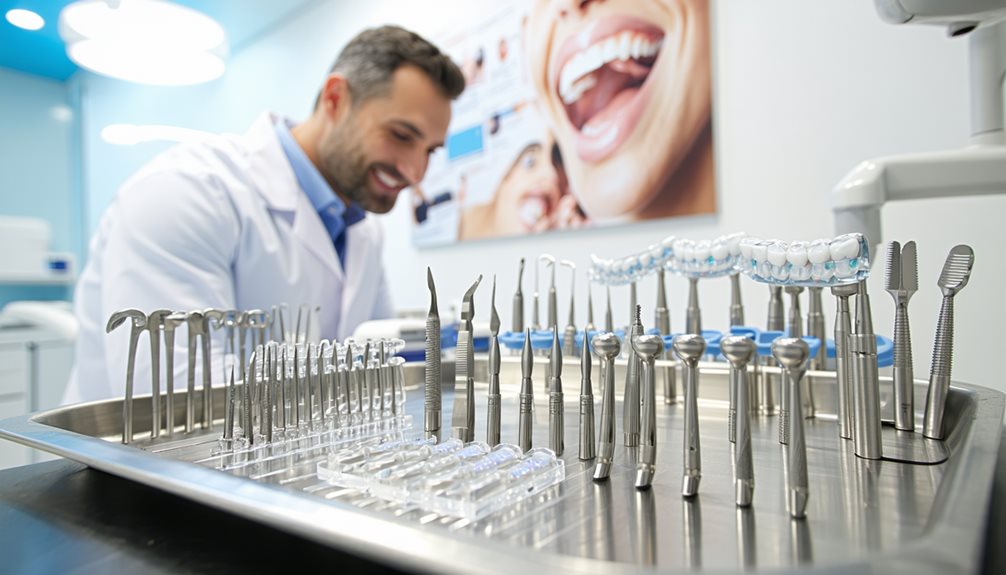
Orthodontic care without insurance can be accessible through strategic avenues. Affordable clinics offer payment plans and sliding scale fees, while dental schools provide reduced-cost services with advanced technology under expert supervision. Discount plans grant access to network providers at reduced rates, and community programs often provide care based on financial needs. Nonprofit dental clinics prioritize essential orthodontic services for underserved populations. DIY aligners are budget-friendly yet require professional consultation to mitigate risks. By exploring these options, individuals can uncover pathways that align with their financial and healthcare needs, with more solutions available beyond this initial exploration.
Research Affordable Clinics
When considering orthodontic care, how can patients effectively identify affordable clinics that maintain high standards of treatment? The journey begins with a thorough research strategy to explore options that balance cost-efficiency with quality.
Patients should utilize digital platforms that aggregate reviews and ratings of orthodontic providers, allowing them to discern clinics renowned for their affordability without compromising on advanced treatment methodologies. Engaging in community forums or social media groups can also yield personal testimonials, providing insights into patient experiences and satisfaction levels.
A pivotal step in researching affordable clinics is to examine the credentials and qualifications of the orthodontists. Verify whether the clinic is equipped with state-of-the-art technology, such as 3D imaging and advanced aligner systems, which indicate a commitment to innovative practices.
Additionally, some clinics may offer payment plans or sliding scale fees, which can further alleviate the financial burden.
Moreover, scheduling initial consultations allows patients to gauge the clinic’s environment and the orthodontist’s approach. During these consultations, inquire about treatment plans, associated costs, and potential alternatives.
This proactive approach not only facilitates informed decision-making but also guarantees that financial constraints do not impede access to high-quality orthodontic care.
Explore Dental Schools
Exploring dental schools as a viable option for orthodontic care can present patients with both cost-effective solutions and access to cutting-edge treatment techniques.
Dental education institutions often offer reduced-cost orthodontic services, providing significant financial relief for individuals without insurance coverage. These schools are equipped with state-of-the-art facilities, allowing patient access to innovative treatment modalities under the supervision of experienced faculty.
In these settings, student training is an integral component, guaranteeing that aspiring orthodontists receive hands-on experience while maintaining a high standard of care. Patients benefit from thorough evaluations and personalized treatment plans developed collaboratively by students and their supervising professors.
This collaborative approach not only fosters the practical skills of future professionals but also ensures that patients receive attention from multiple perspectives.
Moreover, dental schools are at the forefront of adopting new technologies and methodologies, thereby offering patients the opportunity to experience the latest advancements in orthodontic treatment.
The fusion of academic rigor and clinical practice in these institutions assures that patient care is both precise and innovative. Consequently, dental schools represent a strategic choice for those seeking affordable and high-quality orthodontic care, aligning with the needs of a forward-thinking patient demographic.
Consider Payment Plans
Often, patients may find themselves deterred by the financial burden associated with orthodontic care; however, considering payment plans can greatly alleviate this concern. Payment plans offer a structured approach to managing expenses, allowing patients to distribute the overall cost of treatment into manageable monthly installments. This payment flexibility is particularly beneficial for those without insurance, as it transforms a potentially overwhelming expense into a feasible financial commitment.
Orthodontic practices frequently collaborate with third-party financing companies to provide tailored payment plans. These plans typically feature competitive interest rates, which can vary based on the patient’s creditworthiness and the chosen repayment term.
It is essential for patients to thoroughly evaluate the interest rates and terms, ensuring they select a plan that aligns with their financial circumstances.
Innovative financial solutions continue to emerge, offering patients a range of options to suit their unique needs. In some cases, zero-interest payment plans may be available, further enhancing affordability.
Look Into Discount Plans
Exploring discount plans can provide patients with affordable payment alternatives that ease the financial burden of orthodontic care.
These plans often offer reduced rates through network provider benefits, enabling access to quality treatment at a lower cost.
Affordable Payment Alternatives
Considering the financial burden that orthodontic treatment can impose on patients, identifying affordable payment alternatives becomes essential. For individuals seeking innovative approaches to manage orthodontic expenses without insurance, exploring flexible financing and budget-friendly options is a pragmatic strategy.
Flexible financing solutions such as installment payment plans allow patients to distribute the cost of treatment over a more manageable timeframe. This method not only alleviates immediate financial stress but also empowers patients to prioritize their oral health without compromise.
Many orthodontic practices offer in-house financing options tailored to meet the diverse needs of their patients. By personalizing payment schedules, patients can enjoy a degree of customization that aligns with their financial circumstances.
Additionally, third-party financing companies offer low-interest or interest-free options that further enhance affordability. Such budget-friendly options expand accessibility to necessary orthodontic care, ensuring that financial constraints do not hinder the pursuit of ideal dental health.
Moreover, discount plans represent a viable alternative for cost-conscious patients.
Network Provider Benefits
In the domain of orthodontic care, maximizing cost-efficiency often involves tapping into the benefits offered by network providers.
These healthcare professionals collaborate with specific organizations to deliver quality orthodontic services at reduced rates, presenting a compelling insurance alternative for individuals seeking innovative solutions.
Engaging with network providers facilitates access to various discount plans that cater to diverse orthodontic needs without compromising on professional standards.
Here are some network provider advantages to evaluate:
-
Cost Savings: Network providers often offer significant discounts on treatments compared to non-network practitioners, which can substantially lower out-of-pocket expenses.
-
Quality Assurance: These providers are typically vetted by their network, ensuring adherence to industry standards and maintaining a high level of care.
-
Streamlined Processes: Coordination between network providers and discount plan managers can simplify billing and administrative procedures, enhancing patient experience.
-
Flexible Options: With a variety of discount plans available, patients can choose the one that best aligns with their financial situation and orthodontic requirements.
Seek Community Programs
Patients seeking cost-effective orthodontic care may benefit from exploring community programs, such as services offered by local dental schools, which often provide treatment at reduced rates under the supervision of licensed professionals.
Nonprofit dental clinics can also be a valuable resource, offering extensive care with an emphasis on affordability and accessibility.
Additionally, sliding fee scale programs are designed to adjust costs based on an individual’s financial capacity, ensuring that orthodontic treatment remains attainable for a broader demographic.
Local Dental Schools
Exploring orthodontic care options can be greatly enhanced by considering local dental schools, which often offer community programs tailored to provide affordable and extensive care.
These institutions are dedicated to advancing dental education and frequently allow student practitioners, under the supervision of experienced faculty, to participate in patient care. This not only provides an innovative learning environment but also offers patients access to cutting-edge orthodontic treatment at reduced costs.
Here are some key benefits of utilizing local dental schools for orthodontic care:
-
Cost-Effective Solutions: Dental schools typically offer services at a fraction of the cost compared to private practices, making them a viable option for those without insurance.
-
Comprehensive Care: By working within a teaching facility, student practitioners are exposed to a wide array of cases, ensuring thorough, well-rounded care under the guidance of seasoned professionals.
-
Access to Advanced Technology****: Dental schools are often equipped with state-of-the-art technology, providing patients access to the latest tools and techniques in orthodontics.
-
Community-Focused Programs: Many dental schools are committed to serving their communities, offering specialized programs that prioritize patient needs and foster a collaborative approach to care.
These factors make local dental schools an innovative and effective choice for affordable orthodontic care.
Nonprofit Dental Clinics
A valuable resource for individuals seeking orthodontic care is nonprofit dental clinics, which often provide community-focused programs designed to address the needs of underserved populations.
These clinics are at the forefront of community outreach, offering innovative solutions for those unable to afford traditional orthodontic services. Nonprofit programs are strategically designed to bridge the gap in access to essential dental care, ensuring equitable treatment opportunities for all socioeconomic backgrounds.
The operational model of nonprofit dental clinics prioritizes patient-centered care, leveraging a network of volunteer orthodontists and dental professionals who are committed to enhancing oral health outcomes.
They often collaborate with local organizations to identify and serve individuals most in need, creating an integrated approach to community health. These clinics typically offer a range of orthodontic services, including assessments, treatment planning, and follow-up care, all tailored to the unique needs of each patient.
Technological advancements in orthodontics, such as digital imaging and 3D printing, are increasingly being utilized in nonprofit settings, improving the precision and efficiency of treatments.
This innovative approach not only enhances the quality of care but also empowers patients by offering them access to cutting-edge orthodontic solutions, fostering a healthier community through extensive oral health initiatives.
Sliding Fee Scale Programs
Sliding fee scale programs represent a pragmatic solution for individuals seeking affordable orthodontic care within community health settings. These programs adjust fees based on the patient’s ability to pay, facilitating access to essential dental services regardless of financial constraints.
Sliding scale programs are integral in bridging the gap between high-quality care and affordability, particularly for uninsured or underinsured patients.
To effectively leverage these programs, understanding the eligibility criteria is crucial. Here are key considerations:
-
Patient Eligibility: Criteria typically include income verification, family size, and residency status. Eligibility assessments facilitate that resources are allocated to those most in need.
-
Fee Structure: The sliding scale fee is determined by a pre-established matrix, aligning costs with the patient’s financial capacity. This fosters equitable healthcare access across diverse socioeconomic backgrounds.
-
Community Outreach: Many programs are embedded within community health centers, enhancing accessibility through local resources and support networks. This model promotes continuity of care and patient-centered approaches.
-
Innovative Implementation: The integration of technology in managing patient data and scheduling can streamline operations, improving efficiency and patient satisfaction.
Investigate DIY Aligners
With the rise of direct-to-consumer orthodontic products, DIY aligners have become an increasingly popular choice for individuals seeking to correct dental misalignments in a cost-effective manner.
These at-home solutions offer an innovative approach to orthodontic treatment, bypassing traditional, in-office visits. Despite their appeal, it is essential to evaluate both the DIY aligner risks and their effectiveness.
DIY aligner risks include the potential for improper fitting, which may lead to issues such as tooth misalignment, gum irritation, or even tooth loss if not monitored by a dental professional.
The absence of direct oversight from a licensed orthodontist can result in overlooked complications, especially in complex cases requiring personalized treatment plans.
Regarding DIY aligner effectiveness, these systems have shown success in mild to moderate cases of misalignment, such as minor crowding or spacing issues.
However, their efficacy diminishes in severe cases, where thorough evaluation and treatment are paramount.
For patients desiring an innovative, budget-friendly solution, DIY aligners present a viable option.
Nonetheless, it is advisable to consult with a dental professional prior to commencement, ensuring that aligner use aligns with individual dental health needs and objectives.
Such consultation may mitigate risks and optimize outcomes.
Frequently Asked Questions
How Can I Find Orthodontic Care Options Specific to My Location Without Insurance?
To identify orthodontic care options specific to your location, explore local resources such as dental schools and community programs. Engage with innovative platforms that connect patients to providers offering flexible payment plans and reduced-cost services.
Are There Any Online Platforms That Offer Affordable Orthodontic Consultations?
Numerous platforms, such as SmileDirectClub and Candid, provide online consultations offering affordability options for orthodontic care. These services utilize teledentistry to deliver personalized treatment plans, catering to patients seeking innovative, cost-effective solutions in dental alignment.
What Are the Potential Risks of Delaying Orthodontic Treatment Due to Financial Constraints?
Delaying orthodontic treatment due to financial constraints may lead to long-term consequences, including compromised dental health. Potential risks involve misalignment, tooth decay, and periodontal disease, ultimately increasing future treatment complexity and costs, adversely affecting oral health and overall well-being.
Can Telehealth Services Provide Effective Orthodontic Care Without Insurance?
Telehealth benefits, including virtual consultations, can enhance orthodontic care access by providing initial assessments, treatment planning, and monitoring progress, though it may not fully replace in-person evaluations necessary for thorough treatment. Innovations continue to improve remote care efficacy.
How Do I Verify the Credentials of Orthodontic Practitioners Offering Low-Cost Services?
To guarantee credentials verification of low-cost practitioners, consult the American Board of Orthodontics or relevant state dental boards. These entities provide authoritative information on practitioners’ qualifications, guaranteeing innovative and patient-focused orthodontic care standards are upheld.
Conclusion
In the absence of insurance coverage, individuals seeking orthodontic care can consider several viable options to manage costs effectively. Affordable clinics and dental schools offer reduced rates while providing quality services. Payment plans and discount plans can ease financial burdens by spreading costs over time. Community programs might offer additional support for eligible candidates. DIY aligners present a cost-effective alternative, though professional oversight is recommended to guarantee safe and effective treatment outcomes. Thorough exploration of these options can facilitate access to necessary orthodontic care.

