
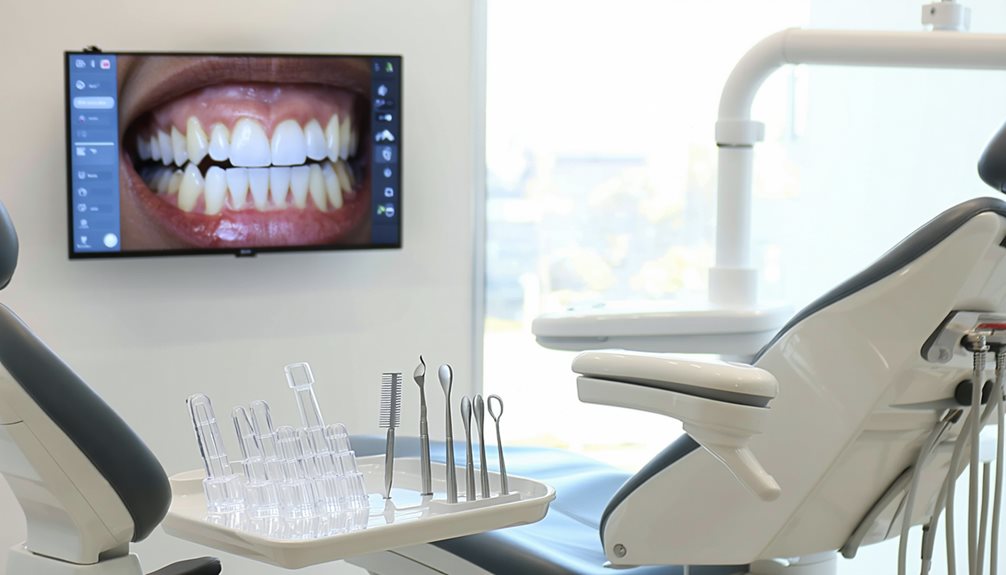
Effective overbite treatments encompass a spectrum of orthodontic and surgical interventions, tailored to the severity of the misalignment. Orthodontic braces—metal, ceramic, or lingual—realign teeth and enhance oral function, with metal braces being the most durable. Invisalign offers a transparent, removable alternative requiring strict adherence for efficacy. In severe cases, orthognathic surgery corrects skeletal discrepancies, improving both functionality and aesthetics. Post-treatment, retainers are essential to maintaining alignment. Choosing an experienced orthodontist is key, as is understanding cost implications and insurance coverage. Explore further to gain an extensive understanding of each treatment’s nuances and benefits.
Braces for Overbite Correction
Correcting an overbite using braces involves precise orthodontic techniques to realign the teeth and jaw into their ideal positions. This method leverages the mechanical advantage of braces to exert controlled forces on the dental structures, facilitating gradual movement and correction of malocclusion.
Various braces types, including traditional metal braces, ceramic braces, and lingual braces, offer tailored solutions for overbite correction. Each type presents unique characteristics: metal braces are robust and effective, ceramic braces provide a more aesthetic option, and lingual braces are concealed behind the teeth for discreet treatment.
The benefits of braces in overbite correction extend beyond mere aesthetic improvements. They play a critical role in enhancing oral function, addressing issues such as jaw pain and uneven wear of teeth.
Evidence-based studies have demonstrated that braces not only correct the alignment but also contribute to long-term oral health by preventing potential complications associated with untreated overbites, such as temporomandibular joint disorders.
Innovation in orthodontics continues to refine these traditional methods, optimizing patient comfort and treatment efficiency.
Technological advancements in materials and design have further enhanced the effectiveness of braces, making them a reliable choice for thorough overbite correction.
Invisalign as an Alternative
Invisalign’s innovative approach to overbite correction offers a compelling alternative to traditional braces, utilizing clear aligners to achieve precise dental realignment. This method leverages advanced 3D imaging technology to create a series of custom-fitted aligners that incrementally adjust teeth positioning with high precision.
Among the notable Invisalign benefits, patients experience enhanced aesthetic appeal due to the transparent nature of the aligners, making them virtually invisible and socially discreet. Additionally, the aligners are removable, which allows for easier oral hygiene maintenance and dietary flexibility, which are significant advantages over conventional orthodontic appliances.
However, Invisalign limitations should be considered when determining suitability for overbite treatment. The effectiveness of Invisalign in correcting complex malocclusions is comparatively reduced, often necessitating traditional braces for severe cases.
Additionally, patient compliance is critical since the aligners must be worn for 20-22 hours per day to achieve the best results, and neglecting this can prolong the treatment duration. In addition, while Invisalign is highly effective for mild to moderate overbite corrections, the treatment may incur higher costs, which could be a limiting factor for some patients.
Retainers for Maintenance
While Invisalign offers an effective solution for many overbite cases, maintaining the achieved results post-treatment is equally important. The implementation of retainers is essential to prevent dental relapse. Retainers are specifically designed to stabilize teeth in their new, corrected positions. The maintenance importance of these devices cannot be understated, as they guarantee the longevity of orthodontic outcomes.
There are several retainer types available, each with unique characteristics suited for different patient needs. Hawley retainers, constructed from acrylic and metal wires, are durable and adjustable, making them a reliable choice for post-treatment stability.
Alternatively, Essix retainers, made from clear plastic, provide a more aesthetic solution, appealing to patients seeking discretion. Finally, fixed retainers, bonded to the lingual surfaces of teeth, offer continuous support and are particularly beneficial for patients who require long-term stabilization.
The choice of retainer type is contingent upon individual treatment goals and lifestyle considerations. Orthodontists must evaluate these factors meticulously to recommend the most suitable option.
To summarize, the strategic utilization of retainers is integral to maintaining orthodontic success, safeguarding investments in innovative treatments like Invisalign, and promoting enduring dental health.
Orthodontic Surgery Options
Orthodontic surgery offers definitive solutions for severe overbites, particularly through jaw realignment procedures and surgical bite correction, which are indicated when conventional orthodontic treatments are insufficient.
These interventions aim to correct skeletal discrepancies and achieve ideal occlusion, with evidence suggesting a high success rate in improving functional and aesthetic outcomes.
Post-surgery recovery is critical for success, necessitating adherence to prescribed guidelines that include dietary modifications, physical activity restrictions, and routine follow-ups to monitor healing and stability.
Jaw Realignment Procedures
How do jaw realignment procedures address severe overbites effectively?
Jaw realignment procedures, also known as orthognathic surgery, are crucial in correcting severe overbites by repositioning the jaw to achieve ideal jaw positioning and enhance facial aesthetics. This surgical intervention is particularly beneficial for patients where traditional orthodontic treatments are insufficient.
The procedure involves precise bone modifications, often necessitating collaboration between orthodontists and maxillofacial surgeons to guarantee a harmonious balance between functionality and appearance.
The use of cutting-edge technology such as 3D imaging and computer-aided surgical planning enhances the precision of these procedures. Such innovations facilitate the customization of treatment plans, tailored to the unique anatomical and aesthetic needs of each patient.
The process typically encompasses several stages:
- Pre-surgical orthodontics: Aligns teeth in preparation for ideal surgical outcomes.
- Surgical intervention: Involves repositioning the jaws to correct skeletal discrepancies.
- Post-surgical orthodontics: Fine-tunes dental alignment, guaranteeing seamless results.
- Recovery and rehabilitation: Focuses on restoring normal function and monitoring progress.
These advanced procedures not only rectify functional issues but also contribute greatly to improved facial symmetry and patient satisfaction, thereby revolutionizing the approach to severe overbite correction.
Surgical Bite Correction
Precision in surgical bite correction represents a significant advancement in treating complex dental malocclusions. This specialized approach, often referred to as orthognathic surgery, is indicated for individuals with severe overbites where traditional orthodontic interventions prove insufficient.
Advanced surgical techniques allow for meticulous repositioning of the jawbones, thereby realigning the bite. Remarkably, these procedures, including Le Fort I osteotomy and bilateral sagittal split osteotomy, are performed by maxillofacial surgeons who possess extensive expertise in craniofacial anatomy.
The surgical process is preceded by a rigorous diagnostic phase, incorporating 3D imaging and digital modeling to devise a thorough treatment plan. Such precision-driven methodologies guarantee that the surgical intervention is not only accurate but also tailored to the unique anatomical requirements of each patient.
The integration of computer-assisted surgical planning has further enhanced the efficacy and predictability of these outcomes.
Post-operative recovery protocols are an integral component of the surgical treatment continuum. While the details of these protocols are specific to individual cases, they generally encompass a combination of pharmacological management and functional rehabilitation, designed to optimize healing and restore masticatory function.
Consequently, surgical bite correction stands as an indication of innovation in dental healthcare, offering a definitive solution for those plagued by severe malocclusion.
Post-Surgery Recovery Tips
When approaching post-surgery recovery for orthognathic procedures, meticulous attention to detail can greatly enhance patient outcomes.
A critical component is the post-surgery diet, which should be tailored to guarantee adequate nutrition while minimizing strain on the jaw. Soft, nutrient-dense foods are recommended, such as pureed vegetables and protein-rich smoothies, which facilitate healing without compromising the surgical site.
Pain management strategies are another cornerstone of effective recovery. Employing a multimodal analgesic regimen, including both pharmacologic and non-pharmacologic interventions, can greatly reduce discomfort and expedite rehabilitation. Techniques such as cold therapy and controlled breathing exercises complement prescribed medications, providing a holistic approach to pain mitigation.
To enhance recovery outcomes, consider these strategic tips:
- Adopt a liquid-to-soft shift diet**** to guarantee nutritional adequacy while maintaining jaw stability.
- Implement prescribed exercises to promote circulation and reduce edema.
- Monitor signs of infection vigilantly, guaranteeing prompt intervention if required.
- Utilize innovative technologies** like telemedicine for continuous postoperative care** and guidance.
Adhering to these meticulously curated strategies fosters a robust recovery process, aligning with contemporary orthodontic advancements.
Choosing the Right Orthodontist
Selecting an orthodontist with extensive clinical experience is essential, as it notably influences treatment outcomes and patient satisfaction.
Evaluating the range of treatment modalities an orthodontist offers can provide insights into their ability to tailor interventions to specific overbite presentations.
Additionally, effective communication during consultations is important for establishing a thorough treatment plan aligned with patient expectations and clinical needs.
Orthodontist Experience Matters
Choosing an orthodontist with extensive experience is essential for the successful treatment of an overbite, as it markedly influences the quality of care and outcomes. The depth of an orthodontist’s qualifications directly correlates to their ability to accurately diagnose and treat complex malocclusions. This depth of expertise guarantees that innovative treatment methodologies are effectively applied, enhancing the prospect of ideal alignment and functional correction.
Orthodontists who possess advanced qualifications and a robust portfolio of patient testimonials often exemplify a high standard of care. Evaluating such qualifications is important:
-
Board certifications in orthodontics, demonstrating adherence to rigorous professional standards.
-
Continued education commitments, indicating an engagement with the latest advancements in orthodontic technologies and techniques.
-
A thorough case history****, evidenced by successful treatment outcomes across diverse patient profiles.
-
Patient testimonials that consistently highlight satisfaction with both the process and results, reflecting the orthodontist’s skill and patient-centered approach.
Selecting an orthodontist with a proven track record of innovation not only promotes confidence in the treatment process but also guarantees the application of cutting-edge solutions tailored to the individual needs of the patient.
In this way, experience becomes the cornerstone of transformative orthodontic care.
Treatment Options Offered
Exploring the diverse array of treatment options offered by orthodontists is essential in the management of overbite correction. The sophisticated spectrum of interventions targets both the mechanical and biological nuances of overbite causes.
Skilled orthodontists employ techniques ranging from conventional braces to cutting-edge aligners, each tailored to the individual’s anatomical and dental hygiene needs. Traditional metal braces, a time-tested method, apply continuous pressure to reposition teeth. However, the advent of clear aligners has introduced a discreet, patient-friendly alternative that offers a customized fit, promoting enhanced dental hygiene by allowing for easy removal during cleaning.
Furthermore, the application of temporary anchorage devices (TADs) represents a revolutionary stride in orthodontic innovation, providing micro-anchorage to facilitate precise tooth movement without the need for more invasive headgear.
Surgical interventions, such as orthognathic surgery, are considered for severe cases, addressing underlying skeletal discrepancies that contribute to overbite causes. The integration of digital imaging and 3D modeling in treatment planning has allowed for unparalleled precision, ensuring that interventions are not only effective but also minimally intrusive.
In selecting an orthodontist, it is vital to prioritize their familiarity with these advanced methodologies, ensuring they can deliver personalized, state-of-the-art care that aligns with contemporary standards in dental health management.
Consultation and Communication
An orthodontist’s expertise plays a crucial role in the successful management of overbite correction, making the consultation phase a critical step in the process. Selecting the right professional guarantees that patient expectations align seamlessly with treatment goals, enhancing outcomes through evidence-based methodologies.
The consultation is not merely an introduction but a thorough exploration of tailored treatment plans, leveraging advanced diagnostic tools to assess individual needs meticulously.
When choosing an orthodontist, consider the following:
-
Credentials and Experience: Verify the orthodontist’s qualifications and track record in addressing overbite issues, confirming they employ cutting-edge techniques.
-
Technology Adoption: Evaluate their use of innovative technologies, such as 3D imaging and digital orthodontics, which enhance precision and treatment efficacy.
-
Patient-Centric Approach: Assess their ability to listen and adapt treatment plans to match patient expectations, guaranteeing personalized care.
-
Communication Skills: Effective communication is key in clarifying treatment goals and timelines, fostering a collaborative environment for the best outcomes.
Ultimately, an informed choice in selecting an orthodontist bridges the gap between innovative treatment solutions and patient satisfaction, assuring a progressive approach to overbite management.
Prioritizing these factors facilitates a transformative journey, harmonizing technical expertise with patient-centric care strategies.
Cost Considerations and Insurance
Understanding the financial implications of overbite treatment is essential for patients considering corrective procedures. The cost of treatment can vary greatly based on the complexity of the case, the type of intervention chosen, and geographic location.
Insurance coverage plays a pivotal role in mitigating these expenses, yet it is important to note that not all insurance plans include orthodontic benefits. Patients should thoroughly review their policy details to ascertain eligibility for coverage, particularly for treatments such as braces, Invisalign, or surgical interventions.
Treatment financing options offer an alternative for those whose insurance does not cover the entirety of the costs or for uninsured individuals. Many orthodontic practices provide flexible payment plans, which can be tailored to suit the financial needs of the patient, making advanced treatments more accessible.
In addition, innovative financing solutions, such as third-party healthcare credit services, are increasingly popular, enabling patients to manage their treatment expenses without considerable financial strain.
Frequently Asked Questions
Can Overbites Cause Speech Difficulties?
Overbites can indeed lead to speech difficulties by affecting articulation. An orthodontic evaluation is essential to assess the extent of misalignment. Speech therapy may complement orthodontic interventions, offering a thorough approach to address and innovate speech-related challenges effectively.
How Does an Overbite Affect Chewing Efficiency?
An overbite can greatly impact chewing efficiency by disrupting ideal chewing mechanics and bite alignment. This misalignment leads to uneven force distribution during mastication, potentially hindering effective food processing and compromising digestive efficiency, warranting innovative orthodontic interventions.
Are There Any Natural Remedies for Overbites?
While natural solutions and home remedies for overbites lack robust scientific evidence, exercises to strengthen jaw muscles and posture correction can be supportive. However, consulting an orthodontic specialist remains essential for effective diagnosis and treatment planning.
What Is the Recovery Time for Overbite Treatment?
The recovery timeline for overbite treatment varies, typically ranging from several months to a few years. Treatment duration is influenced by individual factors, including the severity of the malocclusion and the specific orthodontic interventions implemented.
Can Overbites Lead to Jaw Pain or Headaches?
Yes, overbites can lead to jaw pain or headaches due to improper jaw alignment. Addressing this issue may involve innovative pain management techniques, focusing on aligning the jaw to alleviate symptoms and improve overall oral health.
Conclusion
The treatment of overbite encompasses a range of options, including braces, Invisalign, and retainers, each with specific indications and efficacy. Orthodontic surgery may be necessary for severe cases, while the choice of treatment should involve a thorough assessment by a skilled orthodontist. Cost and insurance considerations play a significant role in decision-making and accessibility. An evidence-based approach, tailored to the individual’s dental profile, guarantees ideal outcomes in overbite correction and long-term dental health maintenance.

